

Stronger Cyber Defense with Advanced CISO-Level Protection
Sophos Gold Partner
Monitoring & Support
Deployment Options
Nationwide Coverage
Dell Hyper-Converged Infrastructure (HCI) combines compute, storage, and networking into a single software-defined platform, replacing traditional infrastructure built from separate servers, storage arrays, and network switches. It offers companies a less difficult way to run virtualized workloads at the same time as decreasing the hardware footprint and management overhead that come with legacy setups.
Virtualization sits at the center of this shift. As corporations run extra applications, support more users, and scale operations, physical infrastructure becomes tougher to control, provision, and secure. Dell HCI addresses this by consolidating infrastructure right into a unified platform that scales on demand, whether or not thru Dell VxRail, Dell PowerFlex, or supported multi-hypervisor environments such as VMware, Microsoft Hyper-V, Nutanix, and Red Hat OpenShift.
Netmate IT enables corporations within the UAE to turn this technology into a practical infrastructure strategy. Our crew assesses present environments, designs an HCI structure around real workload and compliance necessities, and deploys and manages Dell infrastructure so operations remain reliable, are scalable, and easier to assist as the business grows.
As IT environments grow, traditional infrastructure often struggles to keep pace, leaving IT groups coping with complexity rather than driving business outcomes. Most of these demanding situations typically appear well before an agency considers shifting to HCI.
Adopting Dell HCI offers businesses a simplified, software-defined manner to manipulate infrastructure, turning fragmented hardware and rising complexity into a unified, scalable platform that supports increase instead of slowing it down.
Dell HCI runs compute, storage, and networking via a software layer as opposed to separate physical structures. This allows IT teams to control the entire infrastructure through a single interface, lowering manual configuration and freeing up time for more cost-effective work.
Dell VxRail and Dell PowerFlex bring compute, storage, and networking together into one integrated machine. This eliminates the need to acquire, configure, and hold separate hardware layers, simplifying each deployment and ongoing operations.
Dell HCI automatically balances compute and storage resources across the cluster, optimizing performance without requiring constant manual intervention from IT groups.
A single control console gives IT teams visibility and control across the entire HCI environment, from resource allocation to overall performance monitoring, without switching between multiple tools or dashboards.
Built-in redundancy and automatic failover preserve programs running even though a node fails, lowering downtime risk for enterprise-critical workloads.
Businesses can scale infrastructure by adding nodes to the cluster, expanding compute and storage capacity without disrupting current operations or requiring a redesign.
Dell HCI and virtualization solutions, applied via Netmate IT, give groups an easier, more scalable way to run infrastructure while maintaining operations reliable and simpler to control. Key benefits include:
Netmate IT follows an established process to assist businesses in moving from traditional infrastructure to a scalable, software-defined HCI environment built on Dell technology.
Dell HCI helps a couple of deployment fashions, giving organizations the power to pick out the setup that suits their compliance requirements, budget, and workload desires.
As workloads evolve, companies can alter virtualization strategies throughout these models without re-architecting the underlying infrastructure, giving them the power to scale, consolidate, or shift workloads as needed.
Netmate IT deploys and helps a complete range of Dell technology as a part of HCI and virtualization projects, each addressing a selected layer of the infrastructure stack
Choosing the right Dell product depends on your specific HCI and virtualization necessities and business desires. Here’s how Netmate IT normally suits Dell technologies to not-unusual enterprise needs.
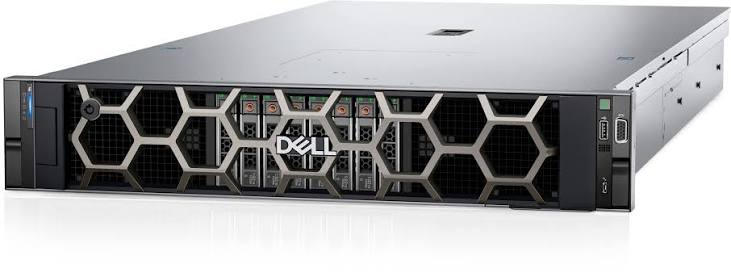
Recommended when businesses need a fully integrated, VMware-based HCI platform with automatic lifecycle control and minimum deployment complexity.
Recommended for groups that need flexible, independently scalable compute and storage across data centers and cloud environments.

Recommended when organizations want high-performance computing to support dense, growing virtual machine environments.

Recommended for businesses that want unified, efficient storage that continues pace with virtualized workloads at scale.
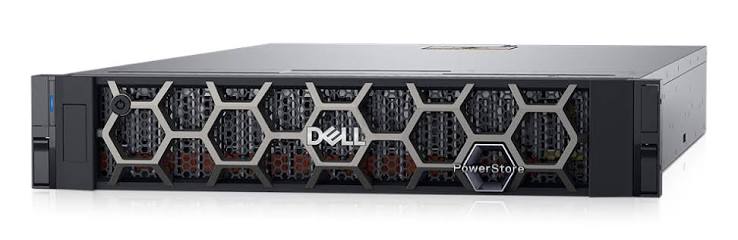
Recommended whilst groups need to install and manage infrastructure always throughout dispensed area places.
A UAE-based manufacturing enterprise approached Netmate IT, while running a combination of aging physical servers, each committed to a single application, with most of the time sitting unused, and no efficient way to utilize resources without buying new hardware. The IT group of workers spent a significant amount of time preserving separate systems, and any hardware failure risked prolonged downtime for production-vital applications. Netmate IT assessed the environment and deployed Dell VxRail, consolidating more than one bodily server into a single HCI cluster running dozens of virtual machines. This decreased the physical footprint, improved resource utilization, and gave the IT crew the capability to provision new workloads in hours rather than weeks.
This pattern is commonplace throughout industries adopting HCI inside the UAE and wider GCC region, from banks consolidating branch infrastructure, to healthcare providers transitioning to digital computer environments for medical group of workers, to outlets scaling infrastructure ahead of peak shopping seasons. Many businesses recognize the price of virtualization; however, they lack the infrastructure consistency or in-house knowledge to scale it reliably. Netmate IT and Dell Technologies help those companies close that gap, delivering HCI infrastructure that stays constant and manageable as workloads develop.
Choosing the right implementation partner determines whether HCI grants actual operational simplicity or provides another layer of complexity. Netmate IT brings the expertise and on-premises presence organizations need to make Dell HCI and virtualization solutions work for their infrastructure.
Hyper-Converged Infrastructure combines compute, storage, and networking right into a single software program-described platform, changing traditional infrastructure built from separate servers, storage arrays, and network switches.
Dell HCI consolidates infrastructure right into a unified platform controlled through a single interface, decreasing the number of structures IT groups want to configure, display, and maintain one by one.
Virtualization improves resource utilization, reduces hardware costs, enables faster provisioning, and makes it simpler to scale, back up, and recover applications compared to running them on dedicated physical servers.
Dell VxRail and Dell PowerFlex form the core of Dell's HCI portfolio, supported by using Dell PowerEdge servers, Dell PowerStore, and Dell NativeEdge for edge deployments.
Yes. Dell HCI presents a constant infrastructure foundation that makes it less difficult to increase workloads to the cloud while desired, without re-architecting current structures.
Yes. Dell HCI helps a couple of hypervisors, which include VMware, Microsoft Hyper-V, Nutanix, and Red Hat OpenShift, giving businesses flexibility in selecting their virtualization platform.
Dell HCI supports a wide range of workloads, including popular corporate applications, virtual desktop infrastructure (VDI), databases, development environments, and AI and analytics workloads.
Fill in your details and we'll get back to you shortly.
Fill in your details and we'll get back to you shortly.