

Stronger Cyber Defense with Advanced CISO-Level Protection
Sophos Gold Partner
Monitoring & Support
Deployment Options
Nationwide Coverage
Transportable gadgets and their dependencies into lightweight, portable units that run consistently throughout any environment. Unlike virtual machines, which include an entire operating system, containers share the host OS kernel, making them quicker to begin, easier to scale, and more efficient to run. This shift from monolithic applications to containerized, microservices-based architecture is what permits cutting-edge cloud-native development.
Kubernetes is an open-source orchestration platform that manages those containers at scale. It automates deployment, scaling, and recovery across clusters of machines, organizing workloads into pods, dispensing them throughout nodes, and isolating environments via namespaces. As companies adopt DevOps practices and CI/CD pipelines, Kubernetes has grown to be the usual for orchestrating containerized workloads reliably, whether or not running a handful of offerings or heaps of them.
Netmate IT enables corporations to build and manage Kubernetes environments using Dell Technologies infrastructure, from PowerEdge computers to enterprise storage and networking. Our team helps agencies through each level, from initial architecture layout to complete-scale container orchestration, so applications run constantly throughout on-premises, hybrid, and multi-cloud environments.
Organizations moving closer to containerized programs come across infrastructure and operational hurdles long earlier than workloads reach manufacturing.
Adopting Kubernetes and containers isn’t always just a technical improvement. It’s a shift in how groups build, set up, and scale applications to stay competitive in a fast-shifting virtual landscape.
Kubernetes automates software deployment, scaling, and lifecycle management, removing the manual overhead of coordinating containers across multiple nodes and environments.
Clusters scale horizontally and vertically based on real-time workload demands, adjusting compute resources robotically without requiring manual intervention from IT teams.
Self-restoration clusters detect failed containers and nodes, automatically rescheduling workloads to maintain uptime and save you from service disruption.
Workloads are deployed consistently across private and public cloud environments, giving businesses the flexibility to run applications anywhere they make the most operational and economic sense.
Netmate IT implements centralized monitoring to tune cluster fitness, workload performance, and resource usage, giving IT groups visibility throughout the whole environment.
Choosing the proper Dell products depends on workload complexity, present infrastructure, and business scale. Here’s how Netmate IT typically fits Dell technology to commonplace Kubernetes requirements.

Recommended because the compute platform for Kubernetes worker and control plane nodes, offering the processing energy needed to run containerized workloads reliably at any scale.
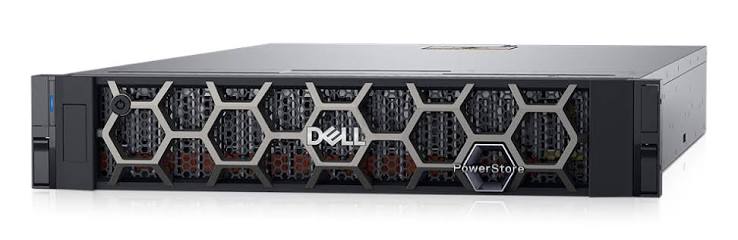
Recommended for organizations that want enterprise storage for persistent, stateful container workloads, delivering the performance and reliability that data-intensive programs require.

Recommended when workloads involve large volumes of unstructured data, imparting a scalable storage built for cloud-local programs and developing datasets.
Recommended for groups that need backup and catastrophe restoration for Kubernetes workloads, protected containerized applications, and data against loss or disruption.

Recommended for groups strolling excessive-density clusters, presenting the high-performance networking Kubernetes environments need to move data between nodes efficiently.

Recommended for corporations already invested in VMware environments, providing an organization with a Kubernetes platform that integrates immediately with existing virtualization infrastructure.

Recommended for businesses that need a complete box application platform with built-in developer tools, security, and lifecycle management.
Netmate IT delivers Dell Kubernetes and container solutions across industries where application modernization is driving measurable business transformation.
A UAE-based retail business approached Netmate IT in advance of a major seasonal sales campaign; its legacy infrastructure was not able to address expected traffic spikes. Previous campaigns had brought on slow page load times and downtime, immediately impacting income. Netmate IT deployed a Kubernetes cluster on Dell PowerEdge infrastructure, containerizing the core e-trade software with automated horizontal scaling to address the traffic in real time. The store now scales seamlessly during traffic surges without over-provisioning infrastructure for a year.
This pattern repeats throughout industries adopting Kubernetes inside the UAE and wider GCC region, from banks modernizing transaction platforms to healthcare providers scaling patient management applications, and producers processing real-time device records. Netmate IT and Dell Technologies support those groups in installing container platforms that perform under real workload needs, while lowering the load on internal IT teams.
Choosing the proper implementation partner determines whether Kubernetes investments deliver actual business results or add useless complexity. Netmate IT brings the know-how and local presence that organizations want to modernize their software infrastructure with self-belief.
Containers bundle applications and their dependencies into lightweight, portable devices that run continually throughout environments. Kubernetes is the platform that automates the deployment, scaling, and management of these containers at scale.
Kubernetes organizes containers into pods, distributes them throughout clusters of machines known as nodes, and automates scheduling, scaling, and recovery to preserve programs running reliably.
Virtual machines each run a complete operating system, whilst bins share the host OS kernel. This makes containers lighter, quicker to start, and easier to scale than virtual machines.
Kubernetes permits quicker software deployment, automated scaling, and consistent performance throughout environments, helping groups modernize legacy applications and support DevOps practices.
Dell PowerEdge offers compute for cluster nodes, PowerStore and PowerScale provide storage for containerized workloads, PowerProtect can provide backup and recovery, and Dell Networking helps cluster connectivity.
Most modern programs may be containerized, including web applications, microservices, APIs, and increasingly, legacy programs re-architecting or replatforming.
Yes. Kubernetes is designed to run consistently throughout on-premises and cloud environments, making it nicely suited for hybrid and multi-cloud deployment models.
Fill in your details and we'll get back to you shortly.
Fill in your details and we'll get back to you shortly.