

Description
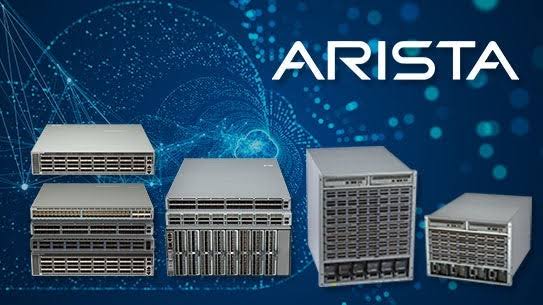
Arista 7170 Series Programmable Data Center Switches
The Arista 7170 Series is a family of programmable data center switches. It gives you 100GbE connectivity, up to 12.8 Tbps of switching throughput, and packet processing you can customize through P4-based profiles. Layer 2 and Layer 3 forwarding come built in, so you can use it for standard switching and for more specialized jobs.
There are three models: the 7170-64C, 7170-32C, and 7170-32CD. They differ in port count and rack size. If you’re comparing options, Netmate IT can help you match a model to your connectivity, infrastructure, and application needs.
Key Features
Programmable Packet Processing
Most switches decide how to handle a packet for you. The 7170 lets your team decide. You can change how it reads packets, looks up addresses, and chooses where traffic goes, so the switch fits your application instead of the other way around.
This works through P4-based forwarding profiles. Developers use them to change packet handling and to choose how forwarding resources are spent. If you need a specialized network function, you don’t have to replace the switch. Just know that what you can do depends on the profile and the software behind it.
High-Density Ethernet Connectivity
The 7170 comes with either 32 or 64 QSFP100 ports. Each port runs at 100GbE or 40GbE. Need smaller links? Breakout cables split a port into 10GbE, 25GbE, or 50GbE.
That helps when you have a mix of servers, storage, and uplinks to connect. Pick the 7170-64C if you need more ports in one box. Pick the 7170-32C or 7170-32CD if rack space is the bigger concern.
Flexible Forwarding Profiles
Profiles also let you shape how the switch uses its resources. You can change how packets are processed and how space is shared between Layer 2 and Layer 3 tables.
Teams use them for specialized routing, tunnel termination, NAT, security policies, and telemetry. A traditional fixed-function switch may not handle some of these jobs the same way. The exact results depend on your profile, EOS release, and configuration.
Arista EOS and Network Automation
The 7170 runs Arista EOS. EOS keeps system state apart from protocol processing and application logic. In practice, a fault in one area is less likely to spread to the rest.
EOS also works with automation tools and Linux-based utilities. Add CloudVision and you can manage the whole network from one place and automate common workflows. That means less manual work for your team when they handle configurations and check device health.
Network Telemetry and Traffic Visibility
When the network slows down, you need answers fast. Depending on your tools, the 7170 can show packet-level data, flow details, timestamps, and congestion information.
Your team can use that data to spot bottlenecks, study traffic patterns, and measure latency. LANZ microburst detection is available too, as long as your EOS version supports it.
High Availability and Redundancy
The 7170 has two hot-swappable power supplies in a 1+1 setup and four hot-swappable fans with N+1 redundancy. You can replace these parts without taking the hardware offline.
It also fits multi-path designs. MLAG (Multi-Chassis Link Aggregation) and ECMP (Equal-Cost Multipath Routing) add redundancy and spread traffic across several links. Your final design will depend on your topology and configuration.
What the Arista 7170 Series Can Do
Out of the box, the 7170 does the basics well: Layer 2 switching and Layer 3 routing. Where it stands apart is the extra work you can hand it. With the right profile loaded, it can terminate tunnels in a multi-tenant setup, handle MPLS labels, or translate addresses with NAT. It can filter packets and enforce access rules too, and its telemetry shows you what traffic is really doing.
One thing to check first. Not every feature works on every setup. It depends on your model, profile, EOS release, and licensing, and Arista’s own documentation lists a few features that EOS doesn’t support yet. Confirm each one before you build a plan around it.
Key Specifications
| Specification | Details |
| Product family | Arista 7170 Series |
| Product type | Programmable fixed-configuration data center switch |
| Available models | 7170-64C, 7170-32C, 7170-32CD |
| Physical ports | 64 or 32 QSFP100 ports, depending on model |
| Additional ports | Two SFP+ ports per model |
| Ethernet speeds | 10GbE, 25GbE, 40GbE, 50GbE, and 100GbE through supported configurations |
| Maximum switching throughput | Up to 12.8 Tbps |
| Maximum forwarding rate | Up to 4.8 billion packets per second |
| Port-to-port latency | As low as 800 nanoseconds |
| Packet buffer | 22 MB on the 7170-64C; check the datasheet for other models |
| Programmable architecture | Configurable packet-processing pipeline with P4 profiles |
| Network operating system | Arista EOS |
| Network management | CLI, CloudVision, and automation and monitoring tools |
| Power redundancy | 1+1 hot-swappable power supplies |
| Cooling | Four hot-swappable fans with N+1 redundancy |
| Rack size | 2RU for the 7170-64C; 1RU for the 7170-32C and 7170-32CD |
Note: Port setups depend on your optics and breakout cables, and throughput and forwarding rates vary by model. Check the official datasheet and current software documentation before you choose a switch.
Common Use Cases
Say you run a cloud platform. The 7170 gives you fast links for heavy traffic, and when standard forwarding falls short, you can change how packets are handled. Running virtual machines for several tenants? Tunnel termination and traffic segmentation help you keep each tenant’s traffic separate.
Other teams have odd routing or security needs that ordinary switches can’t meet. They load a profile and set their own rules for filtering and policy checks. If your servers constantly talk to storage, speed matters most, and the telemetry data helps you find where latency or congestion starts.
Service providers and big enterprises may like it for NAT or custom packet handling. As for the model, let your throughput, port count, and software support decide.
Deployment Scenarios
- High-density spine: Use the 7170-64C when you need up to 64 physical QSFP100 ports and high total switching capacity.
- Compact racks: Use the 7170-32C or 7170-32CD when a 1RU chassis covers your port and space needs.
- Leaf-spine networks: Compare the models for leaf or spine roles based on bandwidth, topology, and traffic distribution.
- Multi-tenant infrastructure: Use tunnel-termination profiles to process traffic where workloads or customers must stay separate.
- Custom routing and security: Review P4-based profiles for specialized packet handling and security policies.
- Performance monitoring: Use telemetry and packet-analysis tools to track congestion, measure latency, and inspect application traffic.
Why Choose Netmate IT for Arista 7170 Series?
Picking a switch is easier when someone helps you check the details. Netmate IT can help you assess switch models, port density, interface speeds, and how well the switches fit with your current servers, storage, and cabling.
If you’re considering the 7170, start with four things: your bandwidth needs, how many connections you need, how much rack space you have, and which programmable features you want. We can help you work through those and find a configuration that suits your deployment.
Also plan early for EOS compatibility, application profiles, licensing, power, cooling, and management tools. Catching issues at this stage saves trouble later.
Netmate IT is based in Bur Dubai and serves customers across the UAE and the wider region, including the GCC, Kenya, and Nepal. Reach out to talk through your Arista requirements, model selection, and deployment services.
Planning a programmable data center network?
Contact Netmate IT to discuss Arista 7170 Series configurations and find a fit for your infrastructure.
Frequently Asked Questions
1. What is the Arista 7170 Series used for?
Mostly for data center switching where you want control over how packets are handled. It links high-speed infrastructure and takes on jobs like custom packet processing, routing, telemetry, and security through profiles. You’ll see it in cloud networks, service provider setups, and custom data center builds.
2. What is the difference between the Arista 7170-64C and 7170-32C?
It comes down to size and ports. The 7170-64C has 64 QSFP100 ports and up to 12.8 Tbps of throughput in a 2RU chassis. The 7170-32C has 32 QSFP100 ports and up to 6.4 Tbps in a 1RU chassis. Both are programmable, so pick the 64C if you need more ports.
3. What makes the Arista 7170 Series programmable?
Its packet-processing pipeline is configurable. You can change how the switch parses packets, performs lookups, and takes forwarding actions. P4-based profiles let developers customize packet handling for specific functions. What you can do depends on the profile and the software support available.
4. Does the Arista 7170 Series support 100GbE and breakout connections?
Yes. The QSFP100 ports support 100GbE and 40GbE. With compatible breakout setups, you can also get 10GbE, 25GbE, and 50GbE interfaces. Which combinations work depends on the model, optics, cables, and port setup.
5. Can Netmate IT help with Arista 7170 Series deployment?
Yes, Netmate IT helps businesses evaluate networking solutions and infrastructure needs. Contact the team to talk about model selection, connectivity, network design, and deployment options. Please confirm product availability, supported configurations, and the scope of implementation services directly with Netmate IT.


Reviews
There are no reviews yet.