

Description
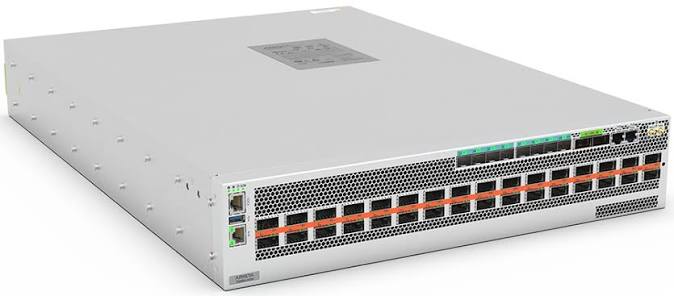
Arista 7280 Series for WAN Edge and Internet Peering
Big routing tables. Sudden traffic spikes. Links that fill up faster than planned. If that sounds like your network, the Arista 7280 Series is worth a close look. It is built for high-volume routing and switching at the WAN edge, at internet peering points, in service provider networks, and between data centers.
The 7280R3 family has fixed and modular systems. Port options, forwarding capacity, and routing scale change from model to model. All of them run Arista EOS, and many support FlexRoute, MPLS, EVPN, and Segment Routing, depending on the model and software. In short, you get hardware that can carry a lot of traffic and a software layer that gives your team control over it.
One note before the details. The numbers below describe the family, not every model. Check the datasheet for your exact configuration before you buy. We will point out where this matters most.
Key Features
High-Speed Ethernet Options
The 7280R3 family covers a wide range of port setups. Need 100G for heavy routing? It’s there. Need 400G for your busiest links? Also there. Some models mix 25G access ports with faster uplinks.
This helps you buy for the network you have, and the one you expect to have in two or three years. It also means the same family can sit at the WAN edge in one project and in a provider network in another. Look at the port layout and supported optics early, because optics are often where budgets get surprised.
Large Routing Tables with FlexRoute
A WAN edge router or peering device has to store a huge number of routes. It also has to react fast when those routes change. FlexRoute, working with EOS NetDB, is Arista’s answer to that job on the 7280R3. Capacity depends on the hardware and the forwarding profile you pick. Arista lists setups with more than 2 million IPv4 and IPv6 routes. Selected 7280R3K systems go past 5 million IPv4 routes. If route scale is the main reason you are shopping, this is the first number to confirm for your model and profile.
WAN Routing, MPLS, and Segment Routing
The family supports BGP, OSPF, IS-IS, MPLS, EVPN, and Segment Routing, depending on the system and software release. Here is how they fit together. BGP swaps routes between autonomous systems. MPLS moves traffic across a provider network. Segment Routing is another way to steer traffic along a chosen path. Which ones you actually use depends on your topology and the services you sell or run. Not every model or release supports every feature in the same way, so check feature limits before you commit to a design.
Deep Buffers for Bursty Traffic
Average utilization can look calm while short bursts still cause drops. Deep buffers give those bursts somewhere to go. Selected 7280R3 systems offer up to 24 GB of dynamic buffer, and the size depends on the model. You also get tools to see the problem. LANZ helps catch microbursts. sFlow and IPFIX give flow data, so your team can find congestion, study traffic patterns, and plan capacity. A big buffer is not a cure for everything. Queue settings, link capacity, and the overall design matter just as much.
Resilience and High Availability
The 7280R3 family supports Equal-Cost Multipath (ECMP) and, on some systems, Multi-Chassis Link Aggregation (MLAG). ECMP spreads routed traffic over several paths. MLAG lets connected devices use links across a pair of switches. Arista also documents fast reroute options for supported protocols. With a good design, these features can shorten the disruption when something breaks. Hardware differs by model, so look at power supply redundancy, hot-swappable fans, and airflow direction too.
Automation and Telemetry
EOS is the operating system behind every 7280R3. It is built for automation, so teams can script routine tasks and plug devices into the tools they already use. CloudVision adds provisioning and central operations. Zero Touch Provisioning (ZTP), LANZ, accelerated sFlow, and Inband Network Telemetry are available on supported configurations. They help you roll out devices faster and see what the network is really doing. Check software compatibility and licensing before deployment. Then agree on a management plan so everyone on the team works the same way.
What the 7280 Series Can Do
Think of the 7280 Series as a router that can also switch, built for places where traffic is heavy. What it does for you depends on the model, the EOS release, and your setup, so treat this as a map and not a promise.
The most common job is WAN edge routing. The box sits where your network meets carriers and other outside networks. Internet peering is a close second. Peering devices carry big routing tables and a lot of fast ports, and that is the kind of work FlexRoute and the high-speed interfaces are meant for.
Service providers also use it to run IP/MPLS, EVPN, and Segment Routing services. If you have lots of links coming in from different places, you can aggregate them on the 7280 before the traffic heads to the core. And if you have more than one data center, it can connect them too.
Your engineers get some useful tools as well. QoS, telemetry, and flow monitoring let them see what the traffic is doing and deal with congestion. Some models add MACsec or IPsec encryption. Arista says the 7280R3 suits cloud data centers, content delivery, service provider networks, IP storage, data center interconnect, and IP peering.
Key Specifications
| Specification | Details |
| Product family | Arista 7280R3 Series |
| Product type | Fixed and modular switches and routing systems |
| Ethernet speeds | 10G to 400G, depending on model |
| Maximum switching capacity | Up to 21.6 Tbps on applicable systems |
| Packet forwarding rate | Up to 4 billion packets per second on applicable systems |
| Packet buffer | Up to 24 GB on selected systems |
| Routing scale | More than 2 million routes on some configurations. Selected 7280R3K systems support more than 5 million IPv4 routes |
| Routing and transport | IP routing, MPLS, EVPN, Segment Routing |
| Multipath | Up to 512-way ECMP on applicable configurations |
| Operating system | Arista EOS |
| Management and visibility | CloudVision, LANZ, sFlow, IPFIX |
| Security | MACsec and IPsec on selected models |
| Rack size | Fixed 1RU and 2RU systems, plus modular options |
| Power and cooling | Depends on configuration |
Common Use Cases
Most buyers come to the 7280 Series because of scale. Too many routes, too much traffic, or too many links for their current gear.
An internet service provider is the clearest example. When you peer with lots of networks, you need many ports and a large routing table, and the right 7280R3 model can cover both. A company with many offices has a different problem. It wants branch traffic to land in one central network, and WAN aggregation does that without managing each site on its own.
Telecom operators lean on MPLS, EVPN, or Segment Routing for the services they sell. Businesses with several data centers use fast interfaces to link them together. Cloud and content platforms need a lot of forwarding capacity, both inside their network and toward the internet. And if your traffic is growing quickly, it is worth looking at this family for route scale, congestion visibility, and resilience.
Deployment Scenarios
- Internet exchange: Terminate peering links and carry a full routing table. Settle port speeds and route capacity first.
- Enterprise WAN aggregation: Collect traffic from branches before it reaches the core or your carriers.
- Telecom provider network: Use MPLS or Segment Routing where they match your transport design.
- Multi-site business: Connect locations with fast links and routing that meet your uptime goals.
- Data center connectivity: Join data centers or network zones using supported interfaces and protocols.
- Traffic monitoring: Use telemetry and flow tools to find congestion and see how the network is used.
These are common patterns, not promises. Your own design should start from traffic forecasts, resilience goals, hardware compatibility, and what your team can realistically run.
Why Choose Netmate IT for Arista 7280 Series Solutions?
Netmate IT Solutions supplies Arista networking in the UAE and GCC. The team covers design, deployment, integration, and support, so you deal with one partner from start to finish.
It begins with design. Netmate IT looks at your traffic, route capacity, and interface speeds, then narrows down the 7280 configurations that fit. Next is the rollout, where the team works with your current protocols, optics, cabling, and software versions. After go-live, Netmate IT offers technical support for Arista environments. Ask the team about the exact scope and terms.
Planning an Arista WAN edge deployment?
Contact Netmate IT to discuss your routing needs and the right 7280 Series configuration.
Frequently Asked Questions
What is the Arista 7280 Series used for?
It handles high-performance routing and switching in enterprise, cloud, and service provider networks. Typical uses are internet peering, WAN aggregation, data center interconnect, and IP/MPLS networking. The right model depends on your traffic and technical needs.
Is it suitable for WAN edge routing?
Yes. The 7280R3 family has the routing features and fast interfaces that many WAN edge and provider roles call for. FlexRoute helps with large routing tables. Still, verify route scale, protocol support, port setup, and throughput for your model.
Which routing protocols does it support?
Arista documents BGP, OSPF, IS-IS, MPLS, EVPN, and Segment Routing across supported configurations. The exact list depends on the hardware and the EOS release, so check the official documentation before you finalize your design.
What interface speeds are available?
Configurations run from 10G to 400G. Port counts and speed combinations differ by model. Use the datasheet to confirm speeds, port density, optics, and cabling.
Can Netmate IT help deploy the 7280 Series?
Yes. Netmate IT provides Arista solutions covering design, deployment, integration, and technical support. Talk to the team about your WAN edge needs to find the right hardware and plan the rollout.


Reviews
There are no reviews yet.